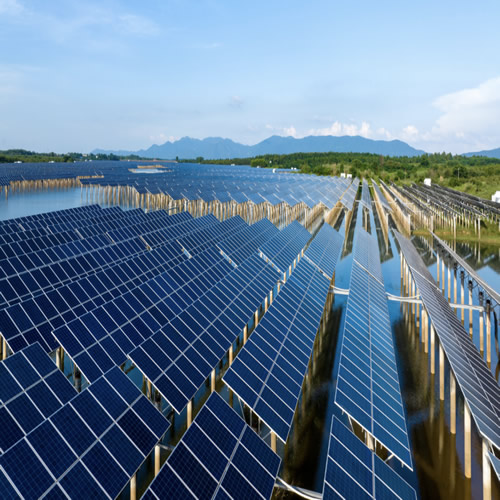
Soriano Group has long understood that the future of sustainable mobility and energy requires deep integration between advanced engineering, renewable power, and ESG leadership. Through our engineering arm—Soriano9 (also known as Gyre9)—we are applying decades of design, prototyping, and systems integration expertise to deliver solutions that accelerate the clean-energy transition.
Recent research from Goldman Sachs confirms what our engineers have been building toward: the global solar energy sector is on a rapid upward trajectory. Despite reductions in policy support from major economies, global solar installations are forecast to reach 914 GW by 2030, a 57% increase over 2024 levels.
The Engineering Imperative
At Soriano9, we don’t just see these numbers as market trends—we see them as design parameters. Each percentage point of growth in solar capacity represents an expanded ecosystem of equipment, storage, distribution, and mobility solutions that must be engineered for efficiency, reliability, and adaptability.
Our engineers specialize in:
Energy system integration for electric mobility, ensuring EV fleets and charging infrastructure can directly utilize solar generation.
Advanced composite and modular structural design for solar arrays that must survive harsh environments while remaining lightweight and easy to install.
Custom thermal management systems to maintain solar and battery efficiency in high-temperature applications.
Why Solar Growth Is Unstoppable
Goldman Sachs Research highlights three structural drivers for sustained solar growth—and Soriano9 has direct engineering responses to each:
Rapid Decline in Costs With solar panel costs falling faster than any investment good in modern history, our role is to engineer complementary systems—mounting, energy storage, power electronics—that meet the same curve of affordability without compromising durability.
Zero Marginal Fuel Costs Once installed, solar energy becomes virtually free to generate. Soriano9 designs closed-loop energy systems for EV platforms, ensuring excess solar power can be stored, redistributed, or applied to microgrid transport solutions.
Modularity and Decentralization Just as panels are modular, our engineering designs emphasize scalable product architectures—from individual EV charging pods to full-scale solar-integrated transportation hubs.
A Converging Mission: Climate, ESG, and Mobility
The Soriano Group’s commitment to climate change mitigation is embedded in every Soriano9 project. By integrating solar energy into the core of our electric mobility solutions, we are enabling ESG-aligned transport ecosystems—from urban e-motorcycle fleets to long-range autonomous vehicles powered by renewables.
This is not a future concept—it’s in active development today. Soriano9’s EV platforms are already being engineered for direct renewable charging compatibility, and our modular battery packs are designed for grid feedback in solar-rich markets.
sorianogroup.com
Engineering Toward 2030 and Beyond
As solar power’s share of global electricity generation surges beyond its current 8%, bottlenecks will shift from panel supply—where there is ample capacity—to systems engineering and deployment. This is where Soriano9’s innovation culture meets the urgent needs of the energy transition.
We are not simply building products—we are designing integrated ecosystems where mobility, energy storage, and renewable generation are inseparable. The outlook for solar energy may be bright, but at Soriano Group, we are making sure that brightness is engineered into every mile traveled, every watt stored, and every ton of CO₂ avoided.
If you’ve ever watched the news and then checked your portfolio, you may wish you hadn’t. Oil prices spiked after US and Israeli strikes on Iran, and tariff announcements in early April sent stocks tumbling. Yet in each case markets absorbed the shocks, stabilized and recovered. US economic growth forecasts are generally resilient, and many stocks have reached new highs.
Even for seasoned financial analysts, it is difficult to predict when an event will cause lasting disruption. However, over time, patterns emerge.
At Soriano Group and Family Office, a fourth-generation investment firm with roots dating back to 1890, we manage global portfolios for high-net-worth families and institutions. Our experience navigating volatility—from the 2008 financial crisis to today’s trade disputes—has taught us that resilience often trumps reaction. We studied those patterns by analyzing the most important geopolitical events since the 2008 global financial crisis, including the Arab Spring, Russia’s invasions of Ukraine, the Covid pandemic and today’s trade disputes. We measured changes in the price levels of important assets—equities, currencies, bonds and commodities—by tracking changes over the five days leading up to an event and the 10 days after. Our analysis gave us a sense of the types of shocks that create significant and lasting market effects.
What we discovered may surprise investors. We found that many headline-grabbing world events, even military conflicts, did not move markets as significantly as many assume. Instead, the largest shifts often came from broader, longer-term geopolitical disruptions that put pressure on the mechanisms underpinning the global economy, particularly those that hit economic fundamentals. We found five patterns that drive market shocks.
Events that slow growth or raise inflation, especially those that alter trade and supply chains, set off the greatest market dips. The Covid pandemic caused the largest changes. After rapid and sharp falls in March 2020, the stock market took almost half a year to recover, through shutdowns, supply-chain disruptions and the associated policy responses. For instance, the S&P 500 experienced its biggest single-day loss since the 1987 crash following the World Health Organization’s pandemic declaration on March 11, 2020. Close behind, albeit with a much faster recovery, were President Trump’s global tariffs in April and the US-China trade negotiations in 2025. Shocks like these shift the flow of goods around the world and pose difficult trade-offs for central bankers and governments. During the 2018 US-China trade war, for example, US tariffs on China reduced US GDP by about 0.2 percent and full-time employment by 142,000 jobs, according to economic modeling. In 2018 alone, the US trade deficit with China hit a record $323.32 billion despite the tariffs, highlighting limited short-term substitution effects.
More than anything, structural uncertainty rattles markets. After the World Health Organization declared Covid a pandemic, people everywhere stared into the unknown, spurring the biggest single-day loss for the S&P 500 since the 1987 crash. Would it be two weeks, or two years, before life returned to normal? Would working practices, real-estate markets and social norms return to pre-Covid levels, or had the world fundamentally shifted? In our view at Soriano Group, this uncertainty amplified the downturn, with global equity markets initially shrugging off risks but later facing prolonged volatility—evidenced by the S&P 500’s average real return dipping below historical norms in the initial months.
Political uncertainty also shakes markets. Surprise election results or referendums such as the 2016 Brexit vote quickly reshaped perceptions of a country’s relative growth and competitiveness, which caused asset prices to fluctuate, particularly in foreign exchange markets. Post-Brexit, the British pound fell sharply, but the S&P 500 showed resilience, with limited long-term drag on US equities—though global trade fragmentation contributed to a 0.2 percent GDP hit in affected regions.
Markets aren’t always great at predicting geopolitical consequences. A major event like the US withdrawal from Afghanistan had little impact on financial markets. Afghanistan’s limited role in the global economy led investors to view the event, despite its political and humanitarian toll, as regionally isolated. The S&P 500 traded near all-time highs after a mere 1.75 percent decline in August 2021, underscoring minimal spillover.
They weren’t wrong, but they didn’t anticipate what could happen next. Some geopolitical experts now view the Afghanistan withdrawal in 2021 as setting the stage for Russia’s 2022 full-scale Ukraine invasion by sowing doubts about US commitments and Western deterrence. To take another example, when the United States didn’t enforce its chemical weapons “red line” in Syria in 2013, global markets were unfazed. However, this inaction may have prompted Russia’s expansion in Syria, prolonging the Syrian civil war, driving migration and reshaping elections in Europe.
Markets tend to underestimate how conflicts can drag on. At the start of 2025, some analysts thought the Russia-Ukraine war was about to end. Early market estimates put the probability of an imminent resolution at around 65 percent. The betting market and the yields available on Ukrainian debt reflected those expectations. Yet the war continues. As of mid-2025, betting platforms like Polymarket priced a 73 percent chance of a cease-fire by year’s end, down from higher odds earlier amid stalled talks. The S&P 500 fell more than 7 percent in the days following Russia’s February 2022 invasion, but recovered within months, illustrating short-lived equity impacts.
Not all assets react in unison. Corporate credit markets—where companies issue debt through bonds and loans—are usually stable through geopolitical events, unless the risk of companies defaulting on their loans rises. Short-term political instability, even military escalations, such as the perennial Chinese military drills around Taiwan, or the missile attacks by the Iranian-backed Houthis on Saudi Arabia in 2019, rarely affect credit markets. The strong demand for high quality credit from longer-term investors makes dips in corporate credit markets short-lived. For the 2019 Houthi attacks, oil prices surged temporarily, with Brent crude rising over 4 percent in the following week, but equities stabilized quickly.
Yet events that threaten a country’s economic growth or creditworthiness, or that raise systemic threats to the status quo, such as Greece’s downgrades during the eurozone debt crisis, increase the yields on government and corporate debt. As a result, it becomes more expensive for those governments and companies to borrow.
With repeated shocks, markets tend to develop a form of immunity. The first time a shock happens—whether that’s a new trade barrier or deal—markets move substantially. We’ve seen this cycle repeat in recent months. The Trump administration’s proposed tariff increases in April, to levels unseen since the 1930s, created pronounced market reactions. Afterward, delays, deals and even the announcements of tariffs that previously would have been surprising prompted more muted responses. In the 2018-2019 trade war, US tariffs on China led to a 0.2 percent global GDP reduction, with US manufacturing employment declining due to higher input costs and retaliation. Chinese exporters saw sales drop, with limited substitution to other markets—only 59.3 percent could pivot due to barriers like sales networks.
Data by Goldman Sachs Research
Our world may be more volatile, but new risks get priced into ways of doing business. As the adage goes, “Time is more important than timing” in assessing your investment returns. So, the next time you hear about what some think is a “catastrophic threat” to your portfolio, you can take a breath. Markets are resilient, and not every geopolitical event that dominates headlines will create a lasting shock.
The new EU-US trade agreement, finalized on July 27, 2025, imposes a 15% tariff on most EU goods exported to the US, a reduction from the previously threatened 30% but higher than the 10% baseline the EU sought. This deal, negotiated between US President Donald Trump and European Commission President Ursula von der Leyen, also includes EU commitments to purchase $750 billion in US energy, invest $600 billion in the US, and buy significant amounts of US military equipment. Below, I explain the implications for businesses on both sides of the Atlantic, focusing on costs, opportunities, and strategic considerations, while addressing how this might affect efforts to counter BRICS initiatives to undermine the US dollar.
Implications for EU Businesses Exporting to the US
Increased Costs and Price PressuresHigher Export Costs: The 15% tariff increases the cost of EU goods entering the US, affecting industries like automotive (e.g., German carmakers like Volkswagen, BMW), pharmaceuticals (Ireland’s $92.1 billion in exports), and agricultural products (e.g., wine, cheese). This could reduce profit margins or force price increases, potentially making EU products less competitive in the US market. For example, the German auto trade group VDA noted that billions in costs have already been incurred due to tariff uncertainty.nbcnews.comE-Commerce Challenges: EU-based e-commerce businesses, particularly in fashion and apparel (39% of cross-border sales), face a 20% cost increase from earlier tariffs, with the 15% rate still posing challenges. Smaller businesses may struggle with reduced US demand, risking revenue losses or market share.admetrics.ioRecession Risks: Economists warn that tariffs could push Europe toward recession, with France, Germany, Italy, and Spain downgrading growth forecasts. Ireland, heavily reliant on US trade, could see a 4% economic output decline if tariffs escalate. This could force EU businesses to cut costs, reduce investment, or lay off workers.nytimes.comnytimes.com
Supply Chain DisruptionsIntegrated Production Chains: The EU and US have deeply integrated supply chains, particularly in automotive and pharmaceuticals. Higher tariffs increase costs for intermediate goods, disrupting production and raising prices for consumers. For instance, a 50% US tariff on steel and aluminum continues to impact EU exporters, potentially paralyzing markets like the US Midwest premium for aluminum.jpmorgan.comDiversion to Other Markets: EU businesses may redirect exports to markets like China, India, or Southeast Asia to offset losses, as seen with copper exports. However, this requires significant investment in new supply chains and market entry strategies, which may not be feasible for smaller firms.en.wikipedia.org
Opportunities and AdaptationsNegotiation Leverage: The EU’s commitment to buy US energy and military equipment may open opportunities for EU firms in these sectors to secure contracts or partnerships, particularly in energy (e.g., replacing Russian gas with US LNG).politico.euMarket Diversification: The tariff pressure may push EU businesses to explore markets in the Global South or Asia, reducing reliance on the US. For example, Australia is considering reopening trade talks with the EU to offset US tariff impacts.en.wikipedia.orgInnovation and Efficiency: To remain competitive, EU firms may invest in automation or cost-cutting measures, particularly in high-margin sectors like pharmaceuticals, to absorb tariff costs without raising prices.
Implications for US Businesses Exporting to the EU
Retaliatory Tariff RisksEU Countermeasures: The EU has prepared retaliatory tariffs on €93 billion of US goods, targeting products like aircraft, autos, soybeans, and bourbon, with rates up to 30% if negotiations falter. These were paused after the July 27 deal but could be reinstated, increasing costs for US exporters. For example, earlier EU tariffs targeted €21 billion in US goods, including poultry, grains, and metals.politico.eunewsweek.comService Sector Vulnerability: The EU may target US services (e.g., tech, finance) in future countermeasures, given the US’s $48 billion service trade surplus with the EU in 2023. This could impact major US tech firms or financial institutions reliant on European markets.europarl.europa.eureuters.comPrice Increases: US businesses may face higher costs if EU tariffs raise the price of American exports, potentially reducing demand for goods like vehicles or agricultural products. Canada’s retaliatory tariffs on US vehicles, generating CA$8 billion, illustrate the potential impact.cnbc.com
Opportunities from EU CommitmentsEnergy and Military Exports: The EU’s $750 billion energy purchase commitment and military equipment deals create significant opportunities for US energy firms (e.g., LNG exporters) and defense contractors. This could boost revenues and jobs in these sectors, aligning with Trump’s push to “buy American.”cnbc.comnbcnews.comInvestment Inflows: The EU’s $600 billion investment pledge could benefit US businesses in manufacturing, tech, and infrastructure, encouraging companies to expand domestic operations. For example, Trump has urged CEOs to move production to the US, citing “zero tariffs” for domestic manufacturing.cnbc.comMarket Access Stability: The deal ensures continued EU market access for US goods at predictable tariff levels, avoiding the 30% or 50% rates threatened earlier. This stability benefits US exporters, particularly in pharmaceuticals and machinery, by reducing uncertainty.cnbc.com
Challenges from Trade UncertaintyMarket Volatility: The tariff saga has caused market turmoil, with US businesses facing investment hesitancy due to unpredictable trade policies. Economists warn that high tariffs could raise US inflation by 0.2-0.3 percentage points, increasing costs for businesses and consumers.jpmorgan.comGlobal Supply Chain Risks: US firms reliant on EU components (e.g., auto parts, semiconductors) may face higher input costs due to the 15% tariff, disrupting supply chains. The American Chamber of Commerce warned that the $9.5 trillion transatlantic business relationship is at risk.reuters.com
Impact on Countering BRICS and the US Dollar
The EU-US trade deal has implications for efforts to block BRICS initiatives aimed at undermining the US dollar, as it influences global trade dynamics and economic alliances:
Strengthening Transatlantic Ties The agreement stabilizes the $1.7 trillion EU-US trade relationship, reinforcing the dollar’s role in transatlantic transactions. By securing EU commitments to buy US energy and military equipment, the deal ensures dollar-based trade in key sectors, countering BRICS’s push for local currency trade (e.g., China-Russia yuan deals).politico.eu The EU’s alignment with the US reduces the likelihood of it joining BRICS-led de-dollarization efforts, such as BRICS Pay or a gold-backed currency. This is critical, as the EU is a major holder of dollar reserves (58% of global reserves in 2022).
Countering BRICS Influence in the Global South The EU’s cooperation with the US could limit BRICS’s appeal to Global South nations (e.g., Brazil, India, Ethiopia) by offering alternative trade and investment opportunities. For instance, the EU is working with Global South partners to counter US tariff impacts, which could deter these nations from aligning with BRICS’s anti-dollar initiatives.gmfus.org However, if EU businesses redirect exports to BRICS markets (e.g., China, India) due to US tariffs, this could inadvertently strengthen BRICS economies and their de-dollarization efforts, particularly if trade is conducted in local currencies.
Tariff Strategy Risks High US tariffs, even at 15%, risk pushing neutral BRICS members like India or Brazil toward alternative systems like BRICS Pay, especially if they face economic losses. India’s estimated $7 billion annual loss from US tariffs could incentivize it to deepen ties with China or Russia, undermining US efforts to maintain dollar dominance.en.wikipedia.org The US must balance tariff policies with diplomatic engagement to prevent BRICS nations from unifying against the dollar. The EU deal’s success in avoiding a full trade war suggests negotiation can work, a model the US could apply to BRICS members like India, which has resisted a BRICS currency.
Strategic Recommendations for Businesses
EU Businesses: Absorb or Pass On Costs: High-margin sectors like pharmaceuticals may absorb the 15% tariff, while low-margin sectors like apparel may need to raise prices or streamline operations. Diversify Markets: Explore Asia, Africa, or Latin America to offset US market losses, leveraging EU trade agreements like those with Japan or Mercosur. Engage in Energy/Defense: Partner with US firms to capitalize on the EU’s $750 billion energy and military commitments, particularly in LNG or defense tech.
US Businesses: Leverage Investment: Expand domestic production to benefit from the EU’s $600 billion investment, especially in energy, tech, or manufacturing. Mitigate Retaliation Risks: Advocate for continued US-EU negotiations to avoid EU countermeasures, particularly in services or agriculture. Monitor BRICS Dynamics: US firms in global markets should watch for BRICS-led trade shifts (e.g., yuan-based deals) and push for dollar-based contracts to maintain currency dominance.
Conclusion
The 15% EU-US tariff deal increases costs for EU exporters, particularly in automotive, pharmaceuticals, and e-commerce, risking reduced competitiveness and recession in Europe. US businesses gain from EU energy and investment commitments but face potential EU retaliation and supply chain disruptions. The deal strengthens transatlantic ties, supporting the US dollar’s dominance by keeping the EU aligned with dollar-based trade, but risks remain if EU firms pivot to BRICS markets. Both EU and US businesses must adapt through cost management, market diversification, and strategic partnerships to navigate this new trade landscape.